Before you send images to an editing provider, one question sits underneath the price, the turnaround and the portfolio: what happens to my files after I upload them?
Security starts with questions you ask before the first upload.
For unreleased products, client portraits or staff photos, the answer matters as much as the edit. Outsourcing means giving another company access to files you cannot easily recall. A promise to keep them "safe" is not an answer. A clear explanation of confidentiality, access, retention and deletion is.
This guide covers photo editing security in the order your files move through it. It explains what an NDA does and does not do, when photo editing and GDPR may overlap, what to ask about secure image transfer, AI training and portfolio use, and what file deletion really means. It also shows what ClippingPathService.com publishes about its own practices, clearly labeled as company policy.
This article is general information, not legal advice. Whether privacy law applies to your project depends on your circumstances, so speak to a qualified legal professional where it matters.
What Are You Protecting?
Not every image carries the same risk. A rough sort helps you decide how much to ask for before you upload.
| Sensitivity | Typical examples | What to consider asking for |
|---|---|---|
| Lower | Catalog photos of products already on sale | Clear retention and deletion terms |
| Medium | Unreleased products, campaign imagery, pre-launch catalogs | Written confidentiality terms and clear access rules |
| Higher | Photos of identifiable people, client portraits, proprietary or regulated material | Confidentiality terms, a data processing agreement where applicable, and documented data handling |
These categories are practical examples, not official GDPR classifications. Your own contracts and obligations decide what a given file requires.
Where Risk Appears in the Editing Workflow
Image data privacy is not one event. It is a workflow, and each stage raises its own question:
Upload → Transfer → Storage → Editing → Review → Delivery → Retention → Deletion
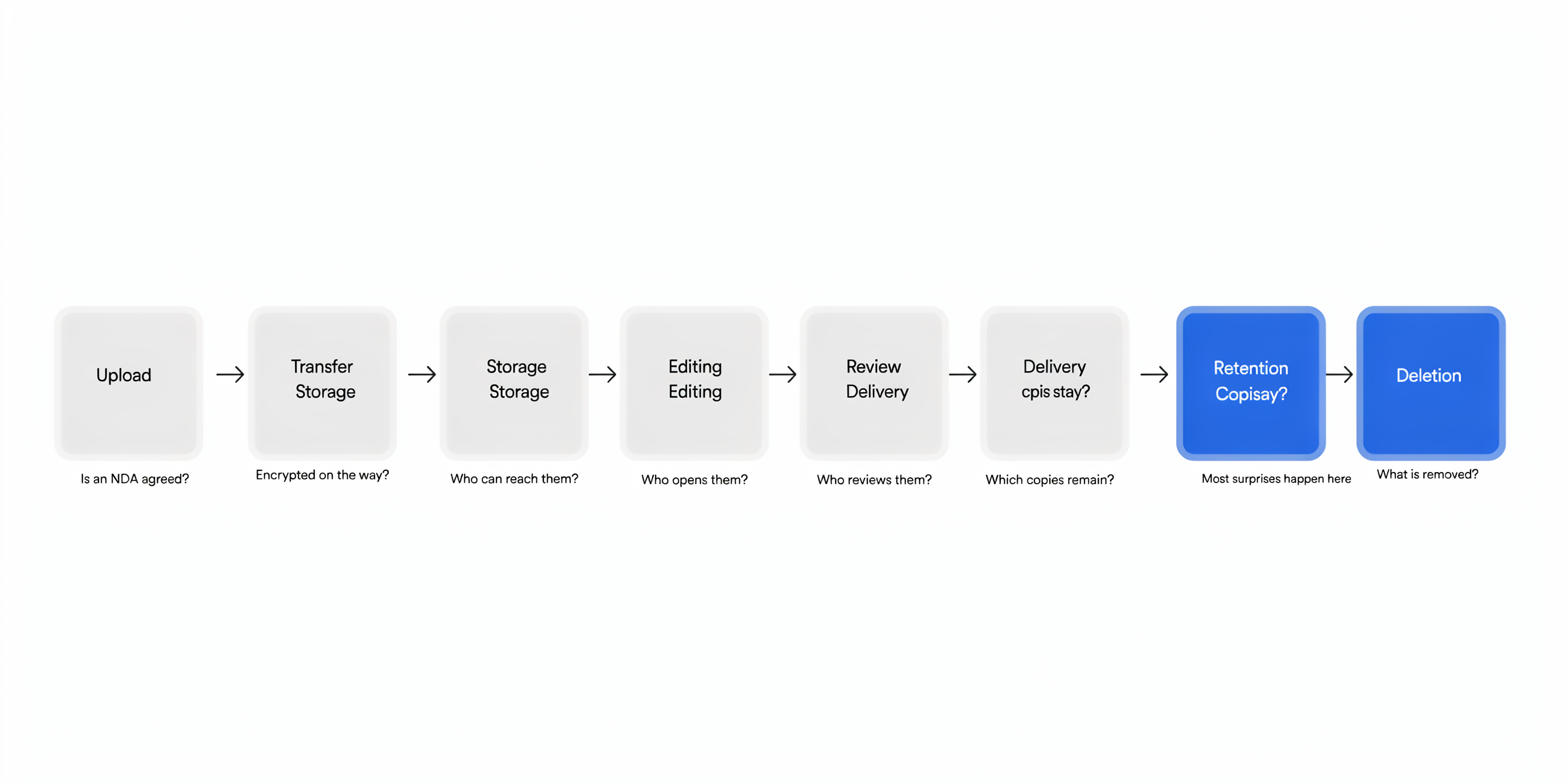
Each stage of the editing workflow raises its own question.
- Transfer: How are files sent, and are they encrypted on the way?
- Storage: Where do they sit, and who can reach them?
- Editing and review: Who opens them?
- Retention and deletion: How long do copies stay, and what is removed?
Most customers think about the first stage. Most surprises happen in the last two.
What an NDA Covers (and What It Does Not)
A non-disclosure agreement (NDA) is a contract about confidentiality. For confidential photo editing, it can set out what must be kept private and how the provider may use your material.
It has limits:
- An NDA is not a technical safeguard. It creates a legal duty. It does not describe how files are transferred, stored or removed.
- An NDA is not a data protection agreement. Confidentiality and privacy law are related but separate.
- An NDA works best when agreed before the first upload.
NDA Points to Consider
These are points worth discussing, not terms every contract must contain:
- Confidential information: What counts as confidential, and does it include filenames and project details as well as images?
- Permitted use: For what purpose may the provider use your images?
- Employee and subcontractor access: Who may handle the files, and are subcontractors involved?
- Portfolio and promotional use: Is any use of your work for display or marketing excluded?
- Duration: How long do the confidentiality obligations last?
- Return or deletion: What happens to project materials when the work ends?
ClippingPathService.com states in its Privacy Policy that NDAs are signed on request.
When Photo Editing and GDPR May Overlap
The General Data Protection Regulation (GDPR) is the European Union's data protection law. It does not automatically apply to every photo editing job. Whether it applies depends on the people and organizations involved, where they are, and what is done with the data. The sections below explain the main ideas.
Personal Data in Photographs
Personal data is information that relates to an identified or identifiable person. The European Commission explains the concept in its data protection overview. A product on a white background usually involves none. Portraits, team photos and event galleries often do. Identifying details can also sit in filenames, metadata and project records, not only in the picture.
Controller and Processor
When you decide why and how personal data is used, you may be a "controller." A provider that handles the data on your behalf may be a "processor." The real classification depends on the relationship between the parties, not on labels in a contract. The European Data Protection Board explains these roles in its Guidelines 07/2020 on controllers and processors.
Data Processing Agreements
Where GDPR applies to a controller and processor relationship, Article 28 requires a contract with specific terms, commonly called a data processing agreement (DPA). An NDA does not automatically replace one. If your images show identifiable people, ask any provider what documentation they can offer.
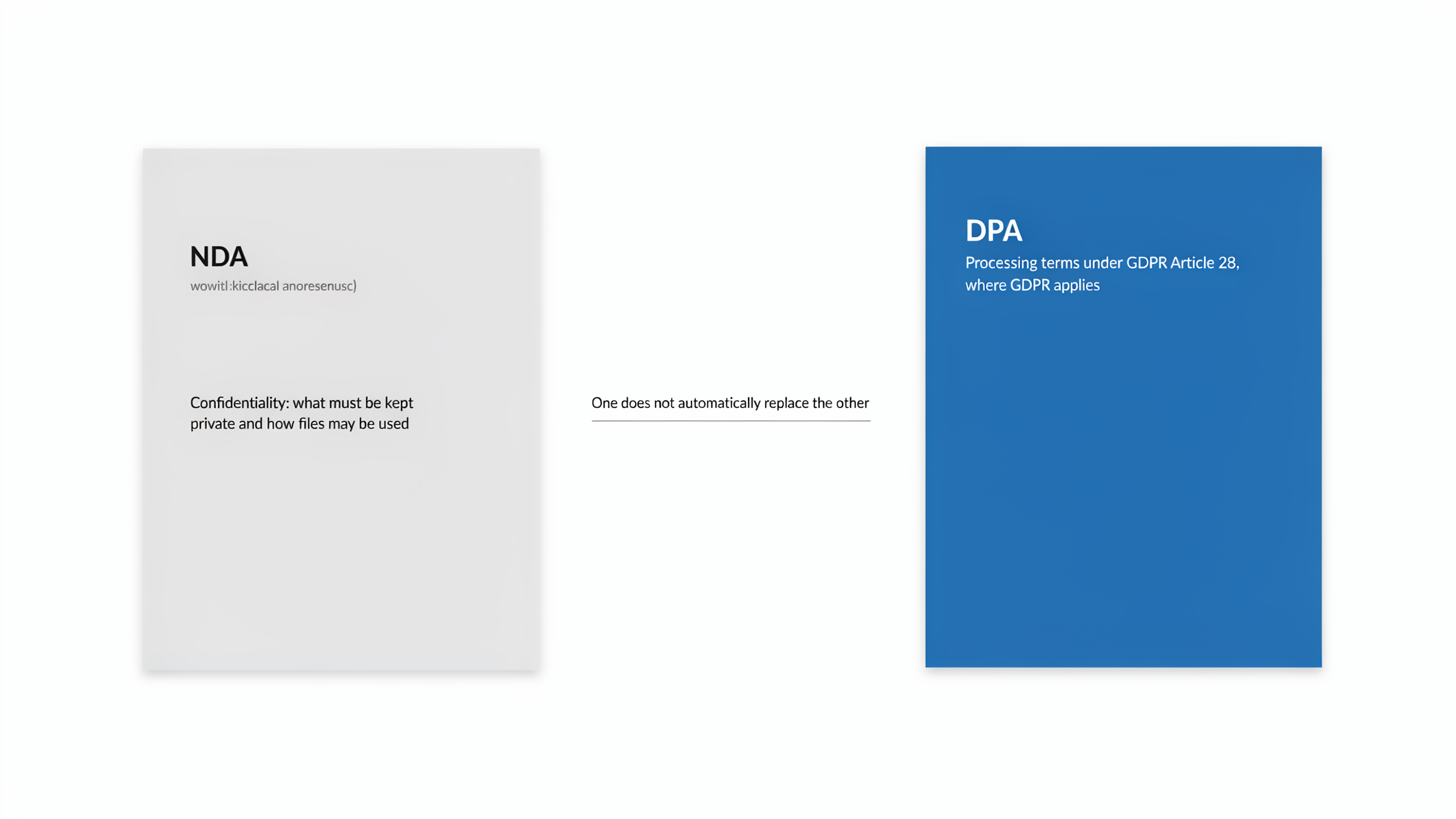
An NDA and a data processing agreement do different jobs.
International Transfers
The Privacy Policy of ClippingPathService.com describes a global team with production facilities in Bangladesh. When personal data covered by the GDPR is transferred outside the EU and EEA, Chapter V of the GDPR may require appropriate safeguards. The European Commission gives an overview of international data transfers.
Standard Contractual Clauses are one possible mechanism, but they do not automatically guarantee compliance. Depending on the transfer, an additional assessment and supplementary safeguards may be necessary, as the EDPB explains in its recommendations on supplementary measures. Which approach fits depends on your circumstances, so take legal advice for your own situation.
Security Safeguards a Provider May Publish
Providers describe their safeguards in different places. What matters is that you can read them and ask about them. The current Privacy Policy of ClippingPathService.com (effective July 5, 2026) describes:
- Encrypted file transfers using SSL/TLS.
- Access to project files limited to assigned editors and quality-control staff.
- Access-controlled servers with role-based staff access.
- Internal confidentiality obligations for team members.
- NDAs signed on request.
These are company-published statements, not the findings of an independent audit. This article does not state that ClippingPathService.com is GDPR-certified or independently audited.
Encryption in Transit vs. at Rest
Encryption in transit protects files while they travel between you and the provider, which is what SSL/TLS does. Encryption at rest protects files while they are stored. They are different safeguards. The Privacy Policy describes encrypted transfers, but it does not describe how stored files are encrypted. If storage encryption matters to you, ask for it in writing.
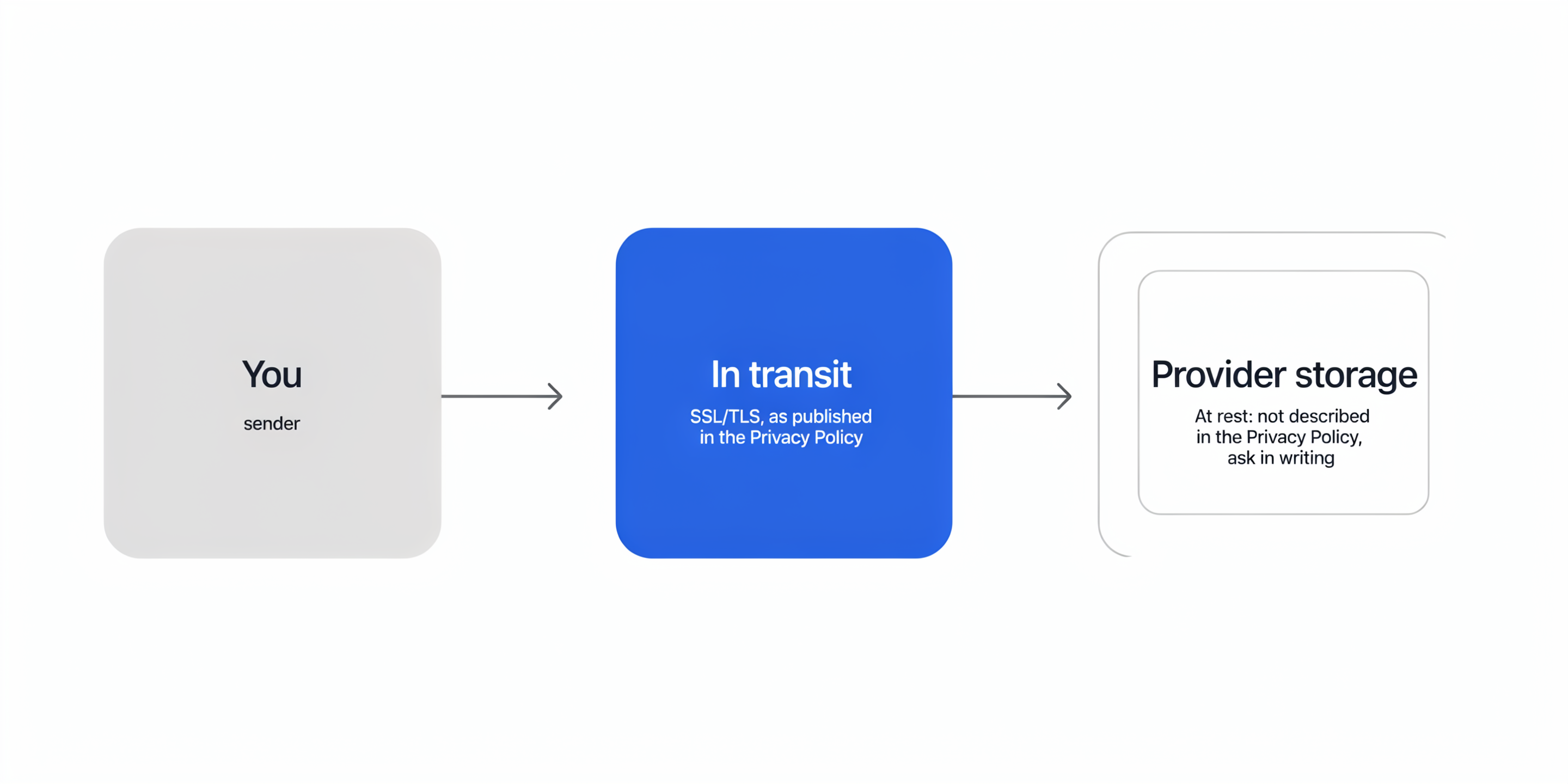
In transit and at rest are two separate safeguards.
AI Training, Portfolio Use and Service Providers
Ask every provider what happens to your images beyond the edit, and keep three questions separate:
- AI model training: Are your images used to train or improve AI or machine-learning systems?
- Public portfolio and marketing use: Are your images or edits shown publicly or used in marketing?
- Infrastructure and service-provider processing: Which providers, such as hosting or storage services, handle your files on the provider's behalf, and under what terms?
The Privacy Policy of ClippingPathService.com states that uploaded images are never used to train AI or machine-learning systems, shared as portfolio material, or disclosed to third parties without written permission. This is the company's published policy and has not been independently verified.
The policy also lists categories of service providers, such as hosting and payments. It does not spell out how the restrictions above relate to infrastructure or service-provider processing, so ask the provider which providers, if any, handle project files.
File Retention and Deletion
"We delete your files" means little until you know which files, from where, and when.
Confirm the Retention Period in Writing
The Privacy Policy currently states that project images are permanently deleted after project completion unless the client asks for them to be kept for ongoing work. This is the company's published statement, and the exact operational deletion timing has not been independently verified. Before you upload sensitive images, ask for the retention arrangement for your project in writing. Do not confuse this with the 30-day response period the policy gives for verified data rights requests, which is a separate matter.
What Does "Deleted" Cover?
Different copies of a file may be handled differently. Ask what applies to each:
| Type of copy | Question to ask |
|---|---|
| Active project files | When are they deleted, and who triggers it? |
| Working and temporary copies | Are they removed with the project files? |
| Delivered files | What copy remains once the final files are sent? |
| Cloud storage copies | Where are they stored, and are they included in deletion? |
| Backup archives | Do backups exist, and how long do they last? |
| Account records and billing information | What is kept, and why? |
Deleting an active project file does not necessarily mean every backup or administrative record disappears at the same time. The Privacy Policy notes that invoices and transaction records are kept as tax and accounting law requires. Ask for a written explanation of deletion scope and timelines, and be cautious about any provider that promises everything is gone instantly everywhere.
What Our 1,200-Image Jewelry Project Does and Does Not Show
A US jewelry ecommerce brand sent ClippingPathService.com 1,200 product images with a four-business-day window, from a Monday brief to a Friday deadline. Of the 1,200 images, 1,162 (96.8%) were approved in the first round, 38 were re-cut and re-delivered that evening, and the batch arrived 14 hours ahead of the deadline.
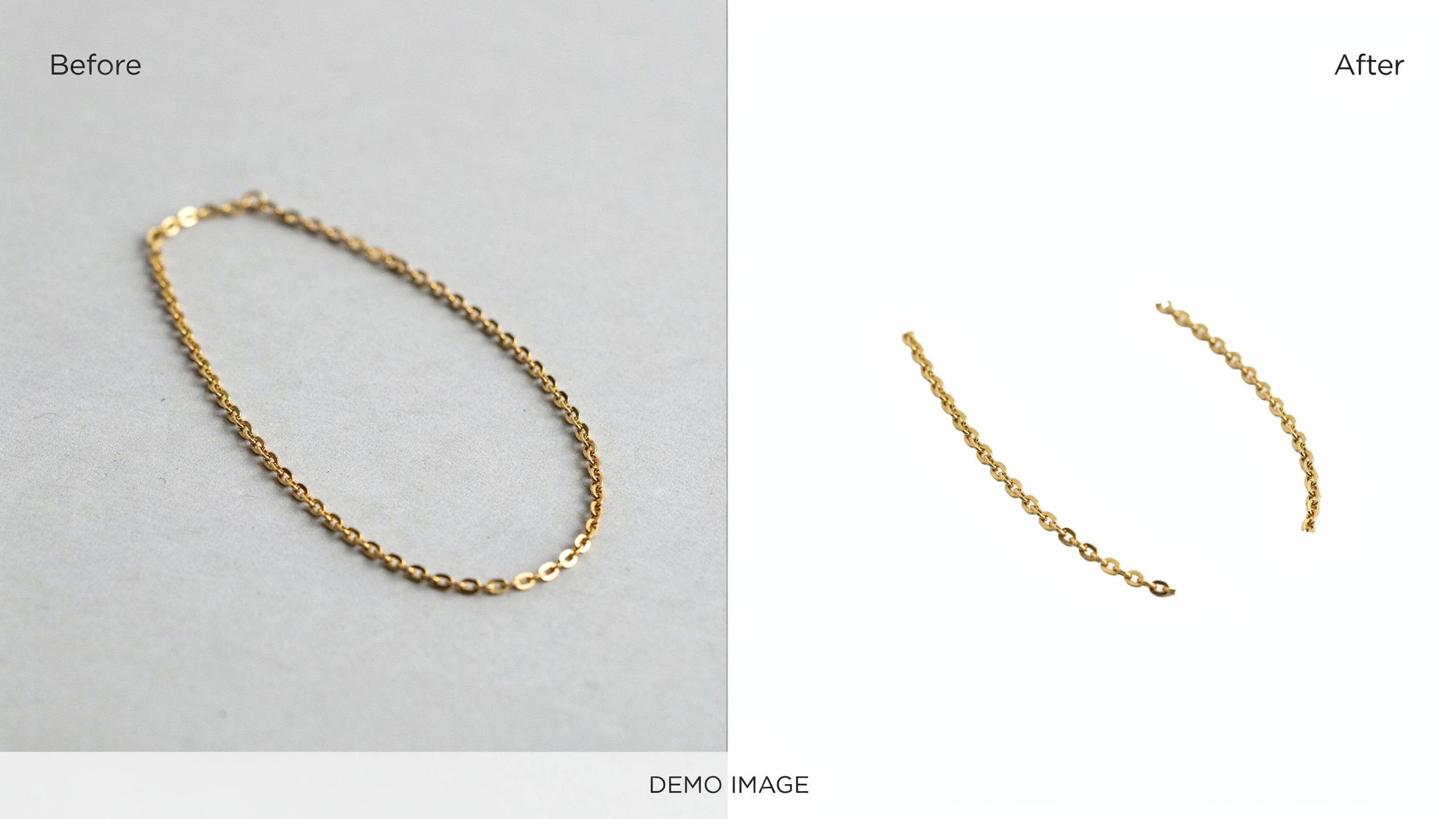
[DEMO IMAGE, REPLACE BEFORE PUBLISHING: swap in a real before and after from the jewelry project once the client approves its use.]
This is evidence of operational workflow, quality control and delivery reliability. It is not evidence of encryption, access controls, NDA performance, GDPR compliance or deletion practices, which belong in written policies and agreements. Read the full 1,200-image jewelry case study.
Questions to Ask Before You Upload
Copy these into your next provider email:
- Will you sign an NDA before I upload anything?
- How are files transferred, and are stored files encrypted at rest?
- Who can open my files, and are subcontractors involved?
- What retention period applies to my project, and can you confirm it in writing?
- What does deletion cover: working copies, cloud storage, backups?
- Are my files used for AI training, portfolio examples or marketing?
- Some of my images show identifiable people. What privacy documentation can you provide, including a data processing agreement where applicable?
- Where are my files processed, and what safeguards apply to transfers?
A provider that answers plainly and in writing is showing you how it will treat your files.
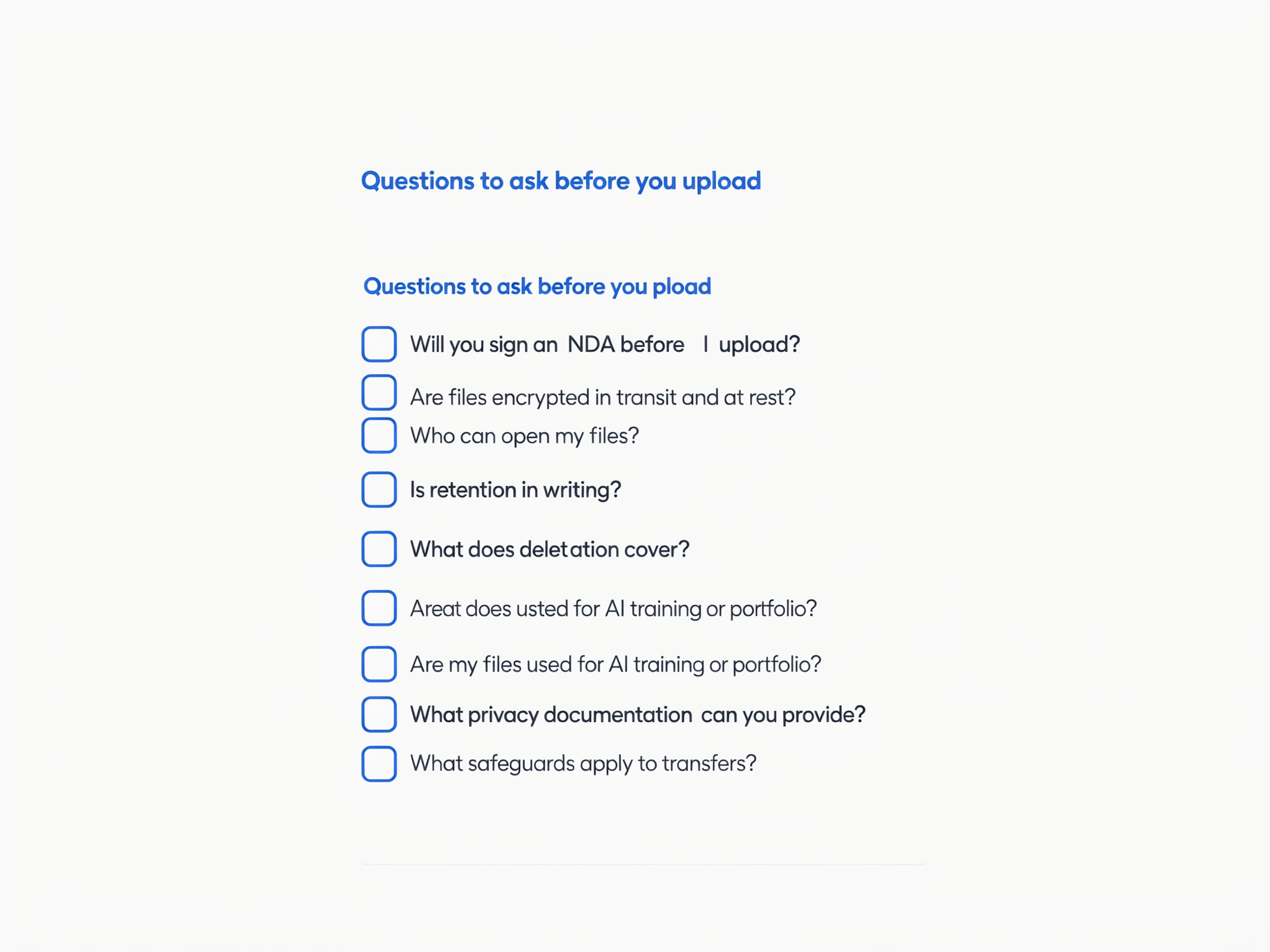
Eight questions to send before you upload.
Ask for the Details in Writing First
If you are weighing confidential photo editing for a project, start with questions, not files. Contact ClippingPathService.com through the contact page or at support@clippingpathservice.com, and ask for written information on:
- NDA availability
- Who has access to your files
- Data retention and deletion
- Any privacy documentation that applies to your project
Please do not upload sensitive images until the confidentiality and data-handling terms you need have been agreed.
Further Reading
- European Commission: data protection explained
- EDPB Guidelines 07/2020 on controllers and processors
- European Commission: international dimension of data protection
- European Commission: Standard Contractual Clauses
- EDPB Recommendations 01/2020 on supplementary measures
- ClippingPathService.com Privacy Policy